
今年の一番茶が終わり一段落しました。
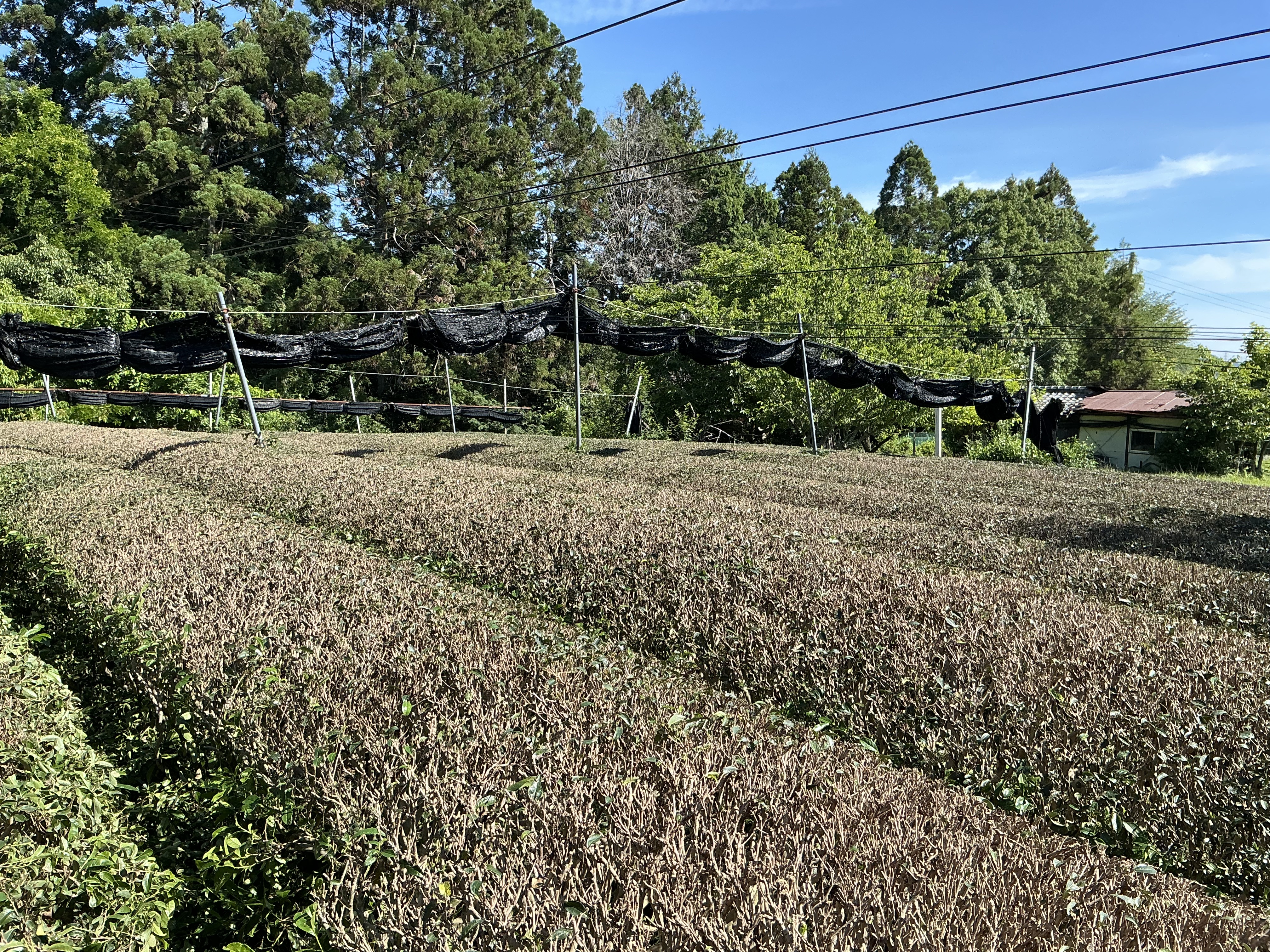
一番茶後の番茶刈が終わった状態(After cut bancha)
例年ですと6月中旬頃にようやく一番茶を販売することができるのですが、今年は新店舗兼工房を開いたことにより5月のうちに新茶を販売することができました。
新店舗と言いましてもここのところの人手不足で開けたり閉めたりを繰り返しておりましてご迷惑をおかけしております。
さて、今年のお茶の出来ですが、煎茶『皐月』はようやく思うような煎茶ができるようになりました。
抹茶 薄茶『胡蝶』は一つの畑はとても良かったのですがもう一つが私が好むものとはずいぶんと違っていたので出荷しました。
出来が悪いのではなく、皐盧庵で売りたいお茶と違っていたためにこのお茶を好む方がおられればと思い、丸ごと売りました。
いちふくは農薬を使用していないことと今年は隣の田んぼが作るのをやめてかなり草が多い茂っているため虫が多く、出来が懸念されましたが、出来上がったものは良いものでホッとしました。
最後にほうじ茶の原料となる親子番茶のお話。
今年は抹茶の原料となる碾茶ばかりでなく刈り直しと呼ばれる親子番茶の価格が高騰しております。
原因は茶農家さんが煎茶の畑を碾茶に鞍替えしたたため、そもそも親子番茶がないからです。
抹茶の高騰は需要過多から、親子番茶の高騰は供給不足から起こっているということになるでしょう。
幸い、皐盧庵茶舗は自社の畑で煎茶も作っておりますため質の良い親子番茶がございますので当面ほうじ茶も販売可能ですが、
これからほうじ茶、特に京都産の純煎の親子番茶(←うちはこれです!)は高級茶となるやもしれません。
The first flush harvest is over, and things have settled down for now.
Normally, we’re able to start selling the first flush around mid-June, but this year, thanks to the opening of our new shop and workshop, we were able to sell the new tea as early as May.
Although we call it a new shop, we’ve been opening and closing it repeatedly due to a recent staff shortage, and we apologize for any inconvenience this has caused.
Now, regarding this year’s tea harvest: we’ve finally managed to produce the sencha “Satsuki” exactly as we envisioned.
As for the matcha and usucha “Kocho,” one field turned out exceptionally well, but the other was quite different from what I prefer, so we decided to ship it out.
It wasn’t that the quality was poor; it simply didn’t match the tea we wanted to sell at Kouroan. Hoping there might be someone who would appreciate it, we sold the entire batch.
As for Ichifuku, since we don’t use pesticides, and because the neighboring rice paddy stopped production this year, the area became overgrown with weeds and infested with insects, so we were concerned about the quality. However, the final product turned out well, so we were relieved.
Finally, a note about Oyako bancha, the raw material for hojicha.
This year, prices have skyrocketed not only for tencha—the raw material for matcha—but also for Oyako bancha, known as “karinaoshi.”
The reason is that tea farmers have switched their sencha fields to tencha production, so there simply isn’t enough Oya-bancha to go around.
While the rise in matcha prices stems from excess demand, the surge in Oyako bancha prices is due to a shortage of supply.
Fortunately, since Koroan Tea Shop grows sencha on our own farm, we have high-quality Oyako-bancha available, so we’ll be able to continue selling hojicha for the time being.